Polymander: a salamander robot that swims and walks
TL;DR
- Problem
- Produce efficient, robust swimming and walking from coupled oscillators driven by a single descending drive signal.
- What we built
- In stages: an open-loop traveling wave, a 16-oscillator double-chain CPG tuned to X-ray recordings of real salamanders, stretch feedback, then contact-driven switching between swimming and walking.
- Result
- +20% swimming speed and −16% cost of transport with feedback, 61% lower joint error against the animal data, and 2.4× more distance under neural damage.
- Stack
- Python, NumPy/SciPy, FARMS (MuJoCo), Matplotlib
How much does a little sensory feedback help a spinal-cord-like controller, especially when parts of it fail?
- +20% SPEED · −16% CoT
- CPG
- Sensory feedback
- MuJoCo (FARMS)
- Bio-inspired control
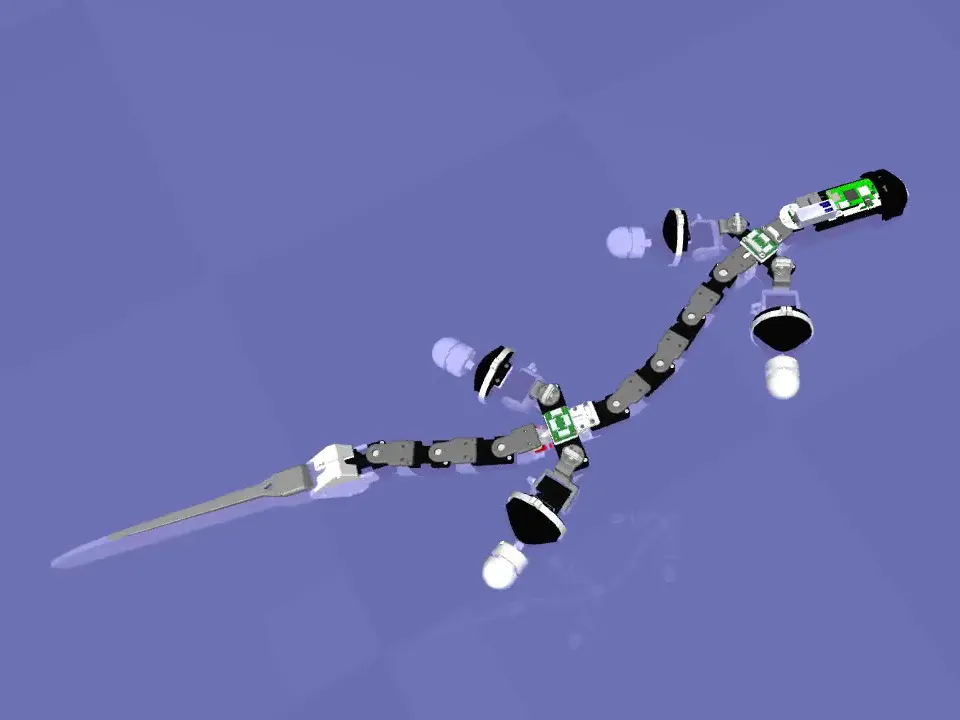
The approach
- Baseline. An open-loop traveling wave drives Ekeberg muscle models; a 5 × 5 sweep of amplitude and wave lag maps out what works.
- Spinal CPG. A double chain of 16 amplitude-phase oscillators, swept over drive and phase lag. Steering comes from left/right drive asymmetry.
- Match the animal. We compared joint trajectories with X-ray recordings of swimming salamanders, then retuned the network to match their uneven phase lag along the body.
- Feedback and damage. Proprioceptive stretch feedback with a gain sweep, then a robustness study with 0–20% random disruption of sensors and couplings.
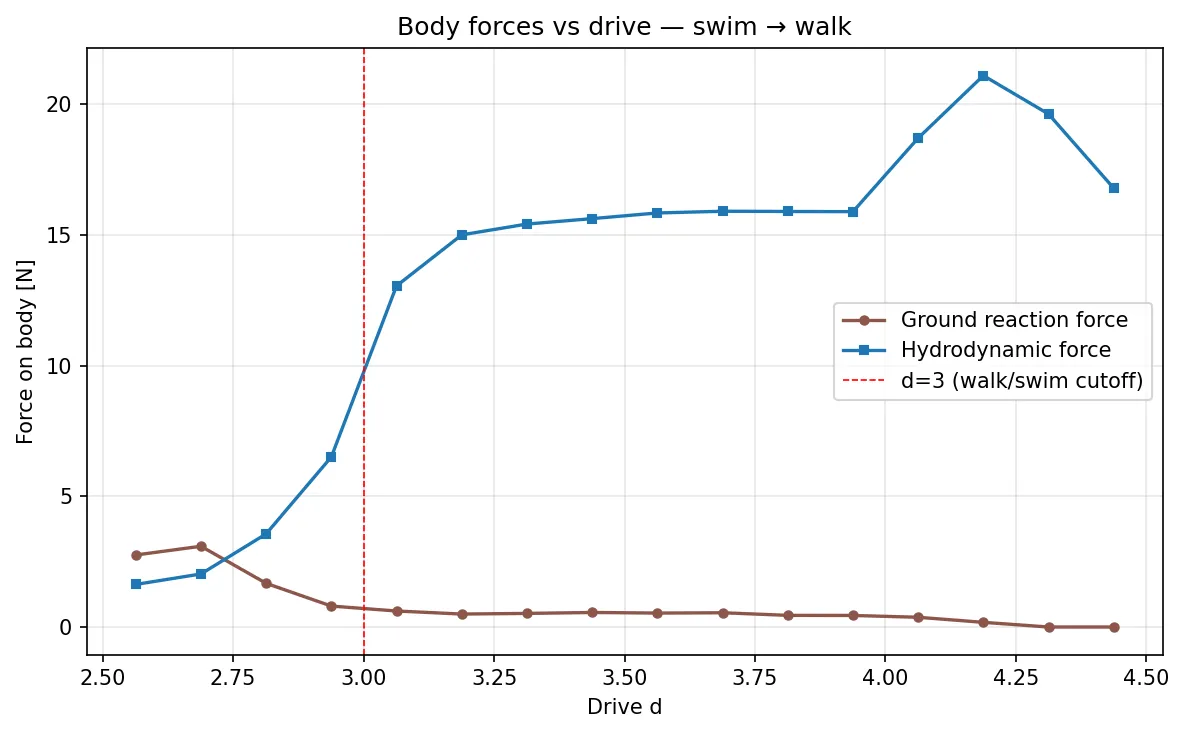
- Amphibious switching. A body and limb CPG where ground contact pulls the drive toward walking (d = 2.5) and its absence toward swimming (d = 4.5).
What it achieved
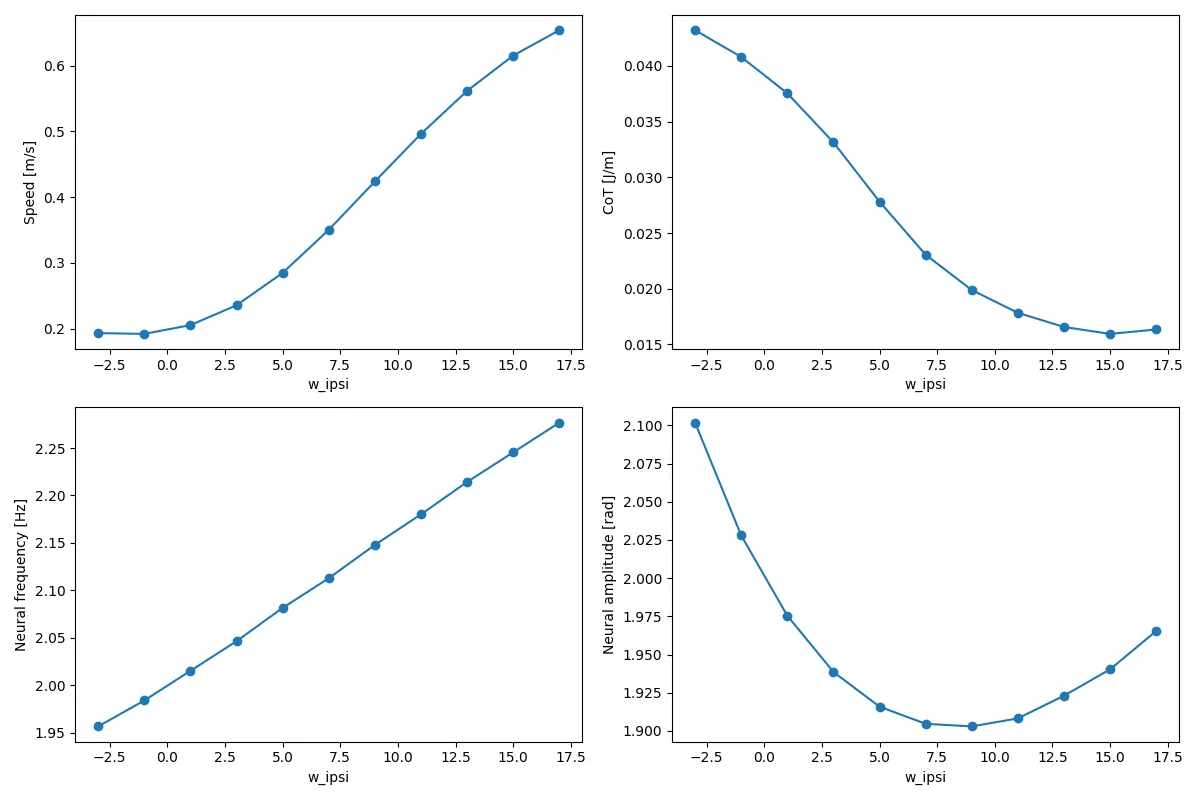
- +20% speed, −16% cost of transport. Stretch feedback (w_ipsi = 3) raised swimming speed from 0.201 to 0.241 m/s and cut cost of transport by 16% at the same drive.
- 61% closer to the animal. Tuning to the X-ray data cut mean joint-trajectory error from 0.236 to 0.092 rad.
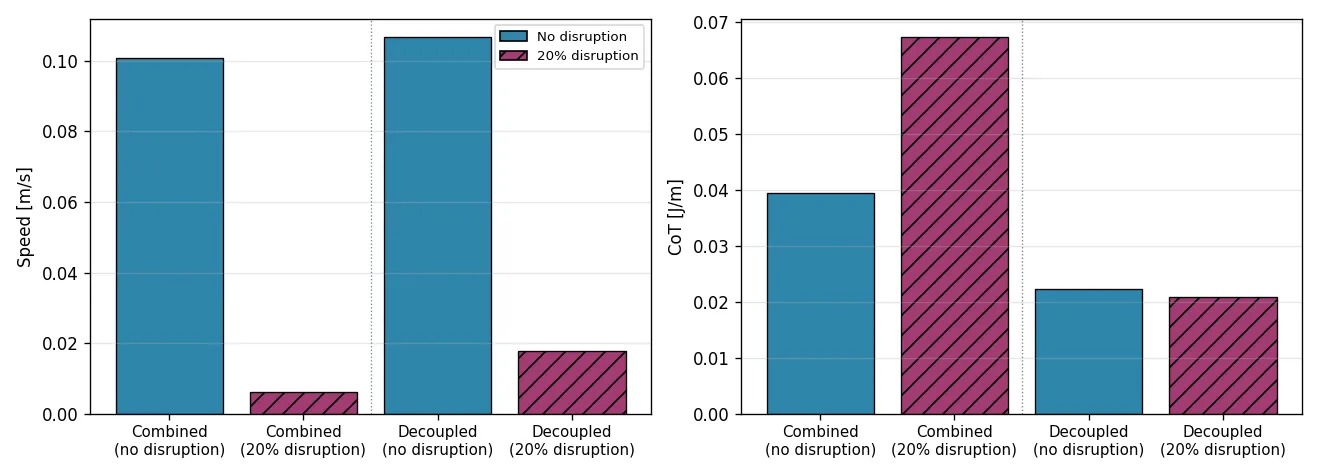
- 2.4× more travel under damage. With 20% random disruption, the decoupled, sensory-driven network kept about 2.4 times more forward travel than the combined (coupled) network.
- Steering. Asymmetric drive turns the robot, with curvatures of about +16 and −20 m⁻¹.
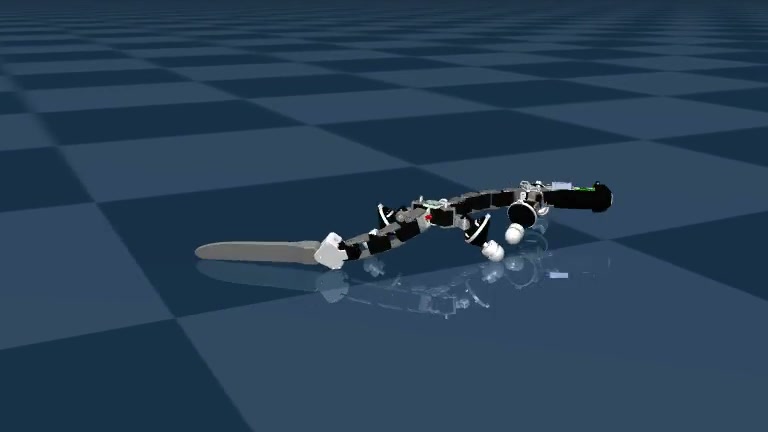
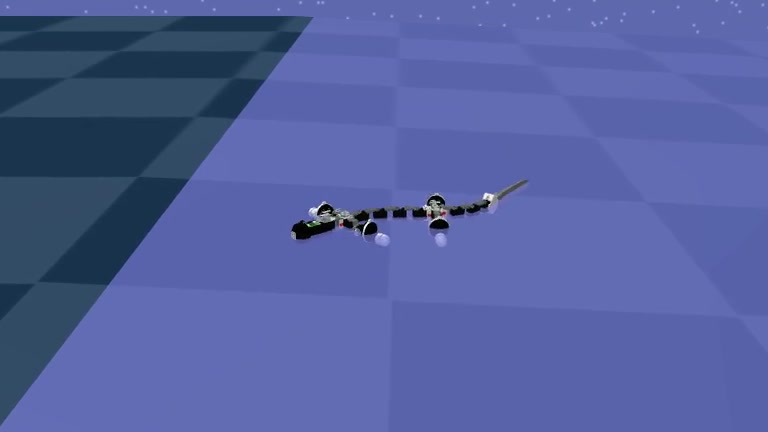
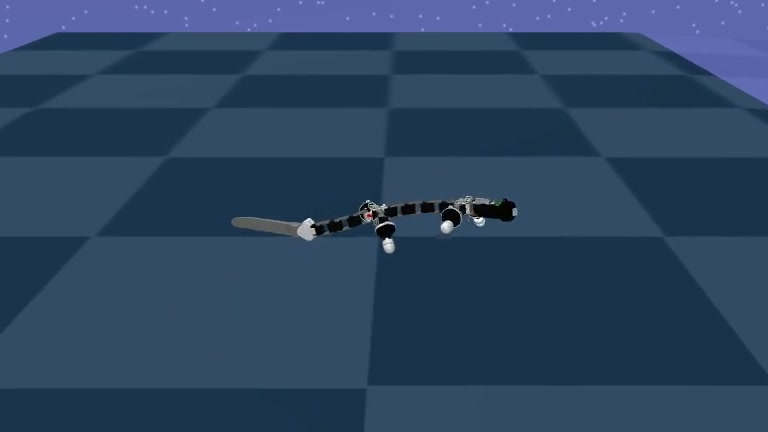
- Swim-to-walk and walk-to-swim. Both transitions happen in an amphibious arena, triggered by ground contact alone.
Footage & figures
Notes
The Polymander robot model, the simulation setup and the salamander X-ray recordings were provided by the course. The code lives in a private team repository.